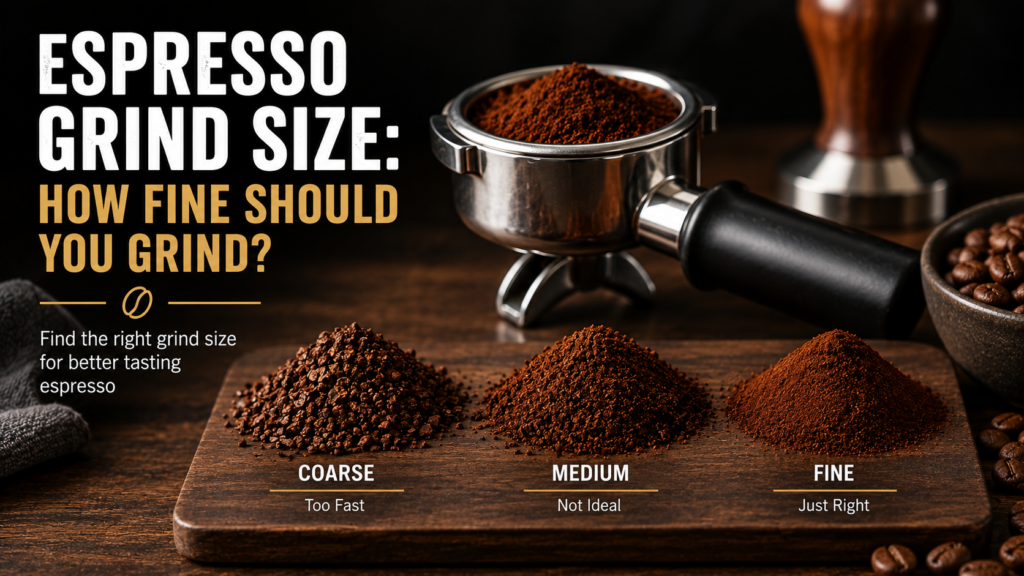
If there’s one variable that has the biggest impact on espresso quality, it’s grind size.
Even small adjustments to your grinder can mean the difference between a balanced, sweet espresso and a shot that tastes sour, bitter, or weak.
The good news is that once you understand how grind size affects extraction, dialing in espresso becomes much easier.
In this guide, we’ll explain how espresso grind size works, how to recognize when your grind is incorrect, and how to make adjustments to improve your shots.
Why Espresso Grind Size Matters
Espresso is brewed by forcing hot water through finely ground coffee under pressure.
The size of your coffee grounds determines how quickly water flows through the coffee puck.
- Finer grounds slow down water flow.
- Coarser grounds speed up water flow.
Because espresso is brewed in such a short amount of time, even tiny grind adjustments can dramatically affect flavor.
What Is the Ideal Espresso Grind Size?
There is no single “perfect” grind setting.
The ideal grind depends on several factors, including:
- The coffee beans you’re using
- Bean freshness
- Roast level
- Humidity and temperature
- Your espresso machine
- Your grinder
As a general rule, espresso grounds should feel finer than table salt but not as powdery as flour.
Most home baristas need to make regular grind adjustments as conditions change.
What Happens If Your Grind Is Too Coarse?
A grind that is too coarse allows water to pass through the coffee too quickly.
This often leads to under-extraction.
Signs Your Grind Is Too Coarse
- Espresso flows very quickly.
- Shot time is under 25 seconds.
- Espresso tastes sour, sharp, or acidic.
- Crema is thin or weak.
- The shot lacks body.
How to Fix It
Adjust your grinder slightly finer and pull another shot.
Make only one adjustment at a time.
If your espresso tastes sour or acidic, check out our guide on why espresso tastes sour.
What Happens If Your Grind Is Too Fine?
A grind that is too fine restricts water flow.
This can cause over-extraction.
Signs Your Grind Is Too Fine
- Espresso drips slowly or barely flows.
- Shot time exceeds 35 seconds.
- Espresso tastes bitter, harsh, or burnt.
- The shot feels dry or astringent.
How to Fix It
Adjust your grinder slightly coarser and test again.
If your espresso tastes harsh or burnt, read our article on why espresso becomes bitter.
How to Dial In Espresso
Dialing in simply means adjusting your grinder until your espresso tastes balanced.
A good starting recipe for many espresso machines is:
- 18 grams of coffee in
- 36 grams of espresso out
- 25 to 35 second shot time
If the Shot Runs Too Fast
Make the grind finer.
Start with this recipe and adjust grind size based on taste.
If the Shot Runs Too Slow
Make the grind coarser.
Remember that taste matters more than shot time alone.
How Much Should You Adjust Your Grinder?
Many beginners make the mistake of making large adjustments.
Instead:
- Make small changes.
- Test one variable at a time.
- Take notes.
- Keep your dose and yield consistent while dialing in.
Even one click on a quality espresso grinder can significantly change extraction.
Why Does Espresso Grind Size Change From Day to Day?
You may notice that yesterday’s perfect setting doesn’t work today.
This is normal.
Several factors influence grind requirements:
- Coffee beans age after roasting.
- Changes in humidity affect coffee.
- Different coffees behave differently.
- Room temperature can impact extraction.
Most home baristas adjust their grinder frequently.
Can You Use Pre-Ground Coffee for Espresso?
Technically, yes.
However, pre-ground coffee rarely produces the best results because espresso requires extremely precise grind adjustments.
For the best espresso, use freshly roasted whole beans and grind immediately before brewing.
A quality grinder is often a better investment than upgrading your espresso machine.
Final Thoughts
Espresso grind size is one of the most powerful tools for improving espresso.
If your shots taste sour, bitter, weak, or unbalanced, grind size should be the first variable you check.
Remember:
- Sour espresso often means the grind is too coarse.
- Bitter espresso often means the grind is too fine.
- Small adjustments make a big difference.
With practice, you’ll learn how to dial in espresso quickly and consistently, producing sweeter and more balanced shots every time.
Happy brewing!
Frequently Asked Questions
What grind setting should I use for espresso?
There is no universal setting. The ideal grind depends on your beans, grinder, and machine. Start near your grinder’s recommended espresso range and adjust based on taste.
How often should I adjust my espresso grinder?
Many home baristas adjust their grinder daily as beans age and environmental conditions change.
Should espresso grind feel like flour?
No. Espresso grounds should be very fine, but not powdery like flour. They should feel slightly finer than table salt.