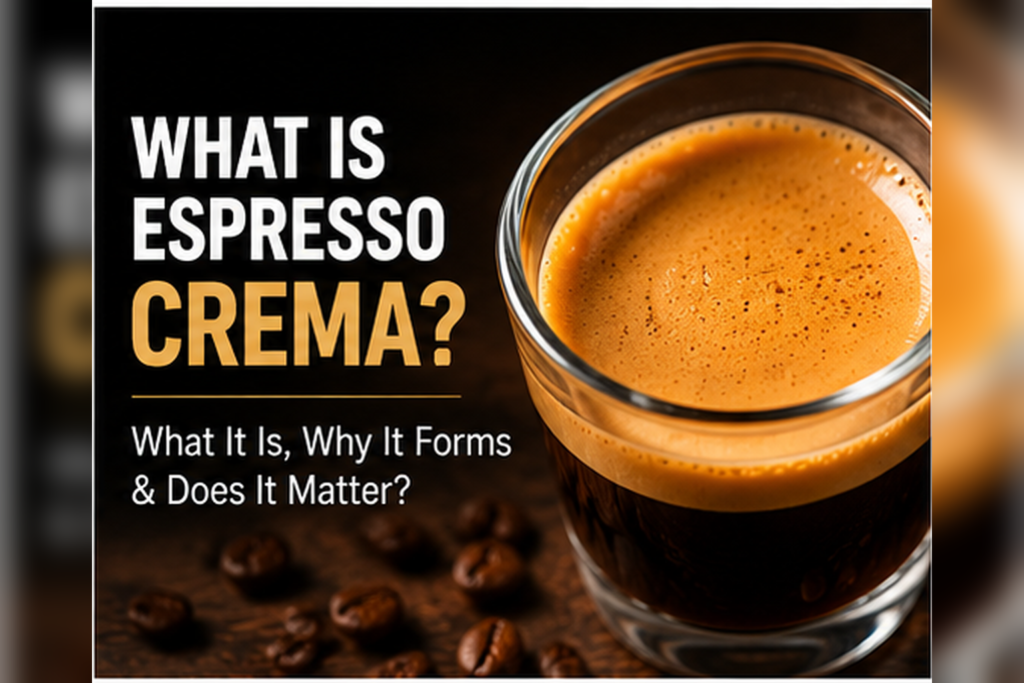
One of the first things new espresso drinkers notice is the golden-brown foam sitting on top of a freshly pulled shot. This layer, known as crema, is often considered a hallmark of espresso.
But what exactly is crema, and does more crema always mean better espresso?
Crema is influenced by several factors, including bean freshness, roast level, and espresso shot time.
What Is Crema?
In this guide, we’ll explain what crema is, why it forms, what affects it, and whether you should use it as a measure of espresso quality.
Crema is the thin layer of golden-brown foam that forms on top of a freshly brewed espresso shot.
It is created when hot water under high pressure extracts coffee oils and releases carbon dioxide trapped inside the coffee beans. These oils and gases combine to create tiny bubbles, forming the creamy layer we call crema.
What Does Crema Look Like?
A good espresso shot will typically have a layer of crema that sits on top of the liquid for a minute or two before gradually dissipating.
Healthy crema is usually:
- Golden brown or hazelnut in color
- Thick and velvety
- Smooth and consistent
- Free of large bubbles
Crema that is extremely pale, thin, or bubbly may indicate an extraction issue.
Why Does Espresso Have Crema?
Unlike drip coffee or pour-over coffee, espresso is brewed under high pressure, typically around 9 bars.
This pressure forces water through finely ground coffee, extracting oils and releasing carbon dioxide that remains trapped inside roasted beans.
The combination of pressure, oils, and gas creates crema.
Without pressure, crema cannot form, which is why standard coffee brewing methods do not produce it.
Does More Crema Mean Better Espresso?
Not necessarily.
While crema is often associated with quality espresso, more crema does not automatically mean better taste.
In fact, some coffees naturally produce more crema than others.
For example:
- Dark roasts often produce more crema.
- Very fresh beans tend to produce more crema.
- Robusta beans create significantly more crema than Arabica beans.
A shot with less crema can still taste excellent.
Ultimately, flavor is far more important than the amount of crema in the cup.
In fact, a properly balanced espresso shot time is usually a better indicator of extraction quality than crema alone.
What Factors Affect Crema?
Several variables influence how much crema your espresso produces.
1. Bean Freshness
Freshly roasted coffee contains more carbon dioxide, which contributes to crema production.
Beans that are several months old will generally produce less crema.
For best results, use beans roasted within the last two to six weeks.
2. Coffee Roast Level
Darker roasted beans typically produce more crema than lighter roasts because the roasting process changes the structure of the beans and affects gas release.
However, darker roasts are not always better.
Choose a roast profile based on taste rather than crema alone.
3. Coffee Variety
Robusta beans naturally create more crema than Arabica beans.
Many traditional Italian espresso blends include a small percentage of Robusta specifically to increase crema production.
4. Grind Size and Extraction
An improper grind size can negatively affect crema.
If your espresso shot runs too quickly, you may see thin or weak crema. If the shot runs too slowly, the crema may become very dark and bitter.
Proper extraction is essential for producing balanced crema.
5. Espresso Machine Pressure
Espresso machines rely on pressure to create crema.
Machines that cannot consistently generate sufficient pressure often struggle to produce thick, lasting crema.
Why Does My Espresso Have No Crema?
If your espresso lacks crema, several factors could be responsible:
- Coffee beans are stale.
- Grind size is incorrect.
- Shot is under-extracted.
- Machine pressure is insufficient.
- Coffee was pre-ground long ago.
Using freshly roasted whole beans and grinding immediately before brewing is one of the easiest ways to improve crema.
Poor extraction can also lead to espresso that tastes either sour or bitter.
Should You Stir Crema Before Drinking?
Many baristas recommend gently stirring espresso before drinking.
Crema can contain concentrated compounds that may taste slightly bitter on their own. Stirring helps distribute flavors evenly throughout the shot and creates a more balanced taste.
Try both methods and decide which you prefer.
Final Thoughts
Crema is one of espresso’s most distinctive characteristics, but it should not be viewed as the sole indicator of quality.
A beautiful layer of crema can be visually appealing, but the most important measure of a great espresso is still taste.
Focus on using fresh beans, dialing in your grind, and maintaining proper extraction. With practice, you’ll consistently produce espresso that not only looks great but tastes great as well.
Happy brewing!